Connect New Roofing To Carefully Inspected Retained Sections
As a Kingston Commercial Roofing Contractor, we install and repair roof systems with careful attention to the boundary between replacement areas and retained roofing.
TPO ROOFINGEPDM ROOFINGINDUSTRIAL ROOFINGCOMMERCIAL METAL
THE WHOLE ASSEMBLY
Work With A Kingston Commercial Roofing Contractor
Kingston Commercial Roofing Contractor services begin with the connections your building needs.
Retaining Part Of A Roof
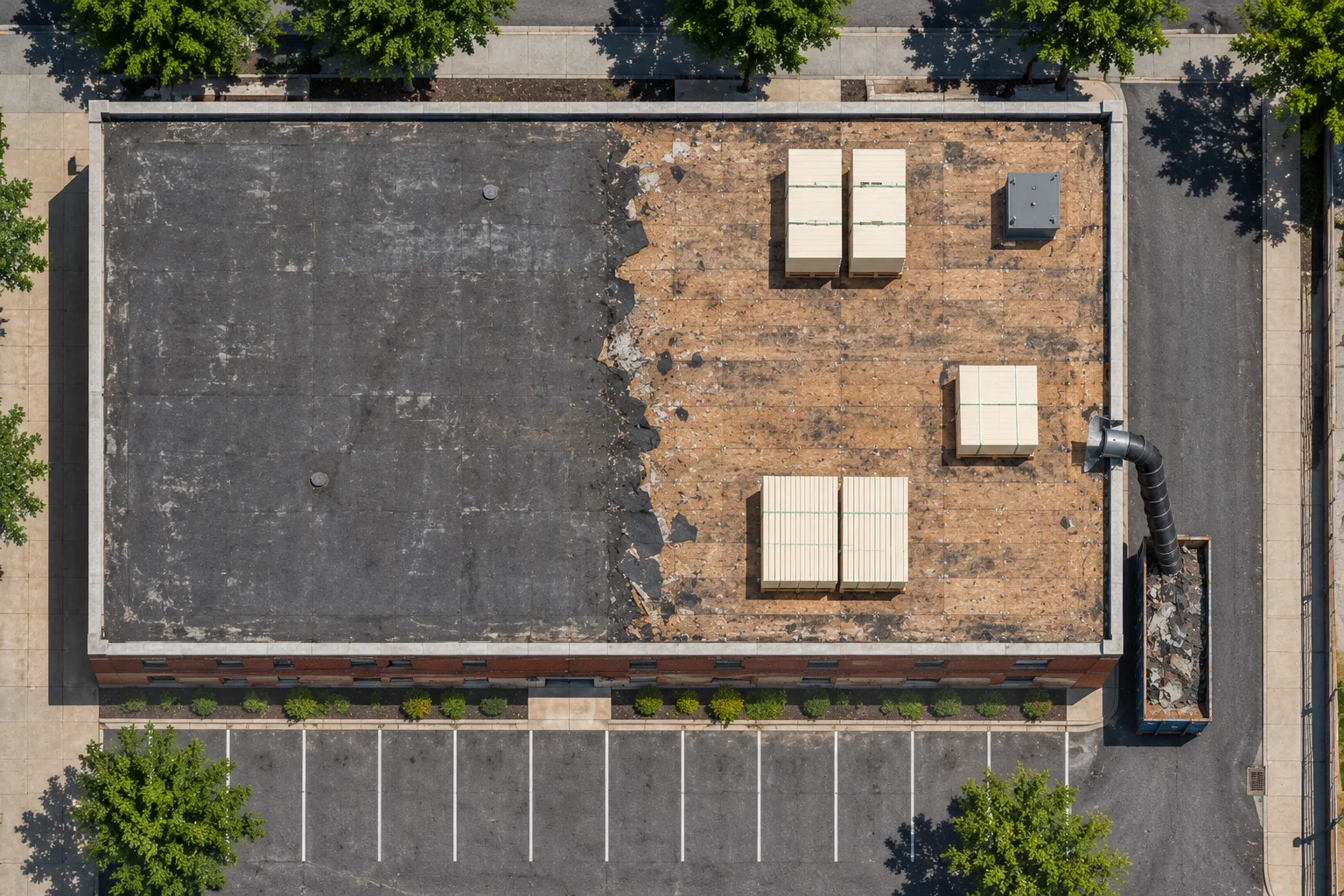
Replacing one roof area while leaving another requires an investigation of both sides of the proposed boundary. We inspect the covering, attachment, insulation, and shared drainage. A dry-looking surface is only one observation; concealed moisture and unstable materials can change where the work needs to stop.
Making A Continuous Connection
A new membrane must connect to compatible, serviceable material at the retained section. Differences in insulation height, sheet type, and attachment affect that connection. We establish the transition detail before roof removal so the finished boundary has a defined water path and an inspectable joint.
INSPECT THE DETAILS
Commercial Roofing Conditions In Kingston
Watch
Moisture Beyond The Stain
Interior staining identifies a problem area, but water can travel beneath the covering before appearing inside. Investigation follows the assembly beyond the reported leak. The replacement boundary includes the affected layers, with additional checks where the moisture extent remains uncertain beneath retained roofing.
Watch
Shared Drainage Areas
Water from a retained roof section can pass across the new work toward a common outlet. We check that route before changing insulation thickness or forming a transition. A raised boundary should never be installed without understanding how runoff will reach the drain on each side.
Watch
Different Roof Heights
An addition or earlier reroof can leave a step between adjacent coverings. We inspect the vertical flashing and the attachment at that change in level. New roofing must meet the actual geometry, including any wall or curb that bridges the height difference.
SYSTEM CHOICES
Commercial Roofing Choices For Kingston Buildings
TPO Connections
Heat-welded TPO needs compatible material at its connection. We determine whether the retained sheet can accept the proposed detail and how the new assembly will terminate. Preparation and seam access are considered before deciding to keep an existing membrane edge in the replacement boundary.
EPDM Transitions
EPDM seams and flashing use the selected system’s joining materials. Existing surface treatments or previous patches need examination before a new connection is made. The work includes preparation of retained rubber and any separation or termination required where a different covering remains in place.
Metal Roof Sections
Retained panels bring profile, movement, and fastening requirements into a partial replacement. We check how new sheets will connect at laps and supporting members. Changing a portion of the roof also requires attention to gutters, end closures, and any equipment flashing at the work boundary.
Documented removal limits help separate the roof layers being replaced from components that will remain.
The boundary is based on observed condition and the planned connection.
Unexpected wet material or deteriorated deck is addressed before it becomes enclosed beneath the next stage of roofing.
Usable Retained Areas
Keeping a roof section in service includes preserving access to its drains and equipment.
We consider how the new work affects those routes.
Temporary material storage and removal paths should not damage the retained membrane or leave its outlets obstructed after construction.
Coordinated Building Access
A partial roof project still needs room for deliveries, disposal, and access to interior inspection points.
We arrange those activities with the property contact.
Areas beneath the planned opening are identified so protection and any access restrictions can match the actual work section.
FROM INSPECTION TO COMPLETION
Installing Commercial Roofing In Kingston
Inspect Both Roof Areas
Start at the proposed replacement section and inspect the adjoining retained roof. Compare visible defects, interior moisture reports, and accessible layers. The investigation establishes whether the intended boundary leaves a reliable base for the new connection and whether further moisture checks are required.
Define The Transition
Choose the assembly and develop the connection between the new roof and the materials staying in place. Account for insulation height, membrane compatibility, and drainage. The detail must remain accessible enough to construct and inspect without relying on concealed, unsupported patching.
Replace The Affected Layers
Remove roofing within the agreed limits and inspect the exposed base. Replace damaged decking or insulation included in the work, then install the new covering. Protect retained sections during handling and keep temporary closures appropriate to the open work area.
Check The Shared Boundary
Examine the completed transition, adjacent drainage, and retained-roof access. Remove debris that could migrate toward common outlets. We explain which roof areas were included and which remain, with attention to the boundary details that future maintenance inspections should continue to examine.
ROOFING OPTIONS
Explore Roof Systems For Your Property
Retained sections need a documented connection to the new assembly. Discuss the age and condition of neighboring roof areas, any earlier repairs at the boundary, and whether water crosses the planned work line. Those details help focus the inspection before removal starts.
Can a Kingston warehouse retain dry roof areas during a larger replacement project?
A Kingston warehouse can retain roof areas when investigation supports their condition and the new assembly can connect properly. We examine moisture, attachment, and drainage on both sides of the boundary. Continued access to the retained sections also matters after the replacement work is complete.
What Determines Kingston Partial Commercial Roof Replacement?
The condition beneath the covering and the feasibility of a lasting transition determine the boundary. We inspect beyond the visible damage and check shared drains. A partial replacement needs an accessible connection to retained material, with height differences and compatible flashing addressed before installation begins.
How Is Kingston Roof Moisture Investigation Used?
Moisture investigation helps define the extent of affected roof layers before removal limits are set. Interior reports are compared with surface findings and appropriate checks beneath the covering. The results guide the work boundary and identify areas where retained insulation or decking needs further examination.
Can Two Membrane Types Meet At One Roof Section?
Different membrane types need a designed transition using compatible materials and attachment details. We identify both coverings and the condition at their edges before choosing that connection. Simply overlapping unlike sheets leaves compatibility and movement questions unanswered, especially where water crosses the boundary on its way to an outlet.
Will Retained Drains Still Need Maintenance?
Yes. Drains serving retained roof areas remain part of the building’s water-control system. We check how replacement work affects access and runoff, then keep those openings clear during construction. Regular debris removal and inspection remain necessary on both the new section and the roof that stays in place.
START WITH YOUR PROPERTY
Get An Estimate From A Kingston Commercial Roofing Contractor
Tell us the address and the work you are considering.