Shape Insulation To Direct Water Toward Roof Outlets
As a Taylor Commercial Roofing Contractor, we install and repair roof assemblies that account for recurring puddles, outlet connections, and the shape of the substrate.
TPO ROOFINGEPDM ROOFINGINDUSTRIAL ROOFINGCOMMERCIAL METAL
THE WHOLE ASSEMBLY
Work With A Taylor Commercial Roofing Contractor
Taylor Commercial Roofing Contractor services begin with the connections your building needs.
Understand The Low Area
A puddle identifies where water collects, but it does not by itself explain why the roof drains slowly. We inspect outlets, surrounding insulation, and accessible supporting conditions. The correction is chosen from those findings before the replacement covering is laid over the area.
Design The Water Path
Reroofing provides an opportunity to coordinate insulation shape with the building’s existing drainage arrangement. We examine how water reaches drains, scuppers, or gutters and where obstructions interrupt the access path. The new assembly needs a planned discharge path instead of reproducing a known low spot.
INSPECT THE DETAILS
Commercial Roofing Conditions In Taylor
Watch
Blocked Outlets
Leaves, loose roofing material, and debris can restrict an otherwise usable drain. Inspection starts by establishing the outlet condition and the surrounding membrane detail. Persistent water after the obstruction is addressed requires further investigation of the roof shape and the drainage connection.
Watch
Depressed Insulation
Damaged or compressed insulation can leave a low area beneath the covering. We check the affected layers and determine which materials need removal. Installing another membrane over the same depression preserves the geometry unless the underlying assembly is corrected as part of the work.
Watch
Equipment Obstructions
A curb or added support can interrupt water traveling toward an outlet. We inspect the upstream side and the flashing around it. Roof layout and insulation details need to guide runoff around the obstruction while preserving the space needed for equipment maintenance.
SYSTEM CHOICES
Commercial Roofing Choices For Taylor Buildings
Tapered Insulation
Tapered insulation can form drainage slopes when designed for the roof arrangement. Layout considers outlet location, assembly height, and the transitions around curbs or walls. We coordinate those details before installation so the new surface leads water toward its intended discharge point.
Membrane Connections
TPO and EPDM need compatible flashing at each drain or scupper. We inspect retained outlet components and the material surrounding them before deciding what stays. The finished connection must fit the roof level and allow the outlet to be maintained after construction.
Panel And Gutter Work
On commercial metal roofs, panel geometry, laps, and gutter connections determine the water path. We inspect those details with the supporting structure. Repair or replacement work addresses the affected connection and the discharge arrangement, including obstructions at the lower roof edge.
Investigating the low area allows the work to include damaged insulation or other contributing components.
Roof replacement then follows a defined correction rather than concealing the same condition.
We explain which drainage-related details are included and which require separate work beyond the covering.
Coordinated Flashing Heights
Drainage changes can alter roof height next to walls and equipment.
Checking those transitions before installation keeps the planned slope and flashing detail connected.
Retained curbs, door thresholds, and parapets are reviewed where the proposed assembly approaches their existing termination levels.
Clear Maintenance Access
A visible, reachable outlet makes debris removal and inspection more practical.
We keep access to drains and scuppers in the finished roof layout.
Walkway protection and equipment routes are coordinated so maintenance activity does not block the very openings intended to discharge water.
FROM INSPECTION TO COMPLETION
Installing Commercial Roofing In Taylor
Trace The Collection Area
Inspect the puddle location, its perimeter marks, and the access path to the outlet. We compare those observations with roof layers and reported interior moisture. The investigation identifies restrictions and assembly conditions that must be understood before selecting a correction.
Coordinate The Drainage Detail
Develop the roof arrangement around the confirmed outlet locations and required assembly heights. Identify changes to insulation, flashing, or retained components included in the project. The plan accounts for upstream equipment and any neighboring roof area that sends water across the work.
Install The Shaped Assembly
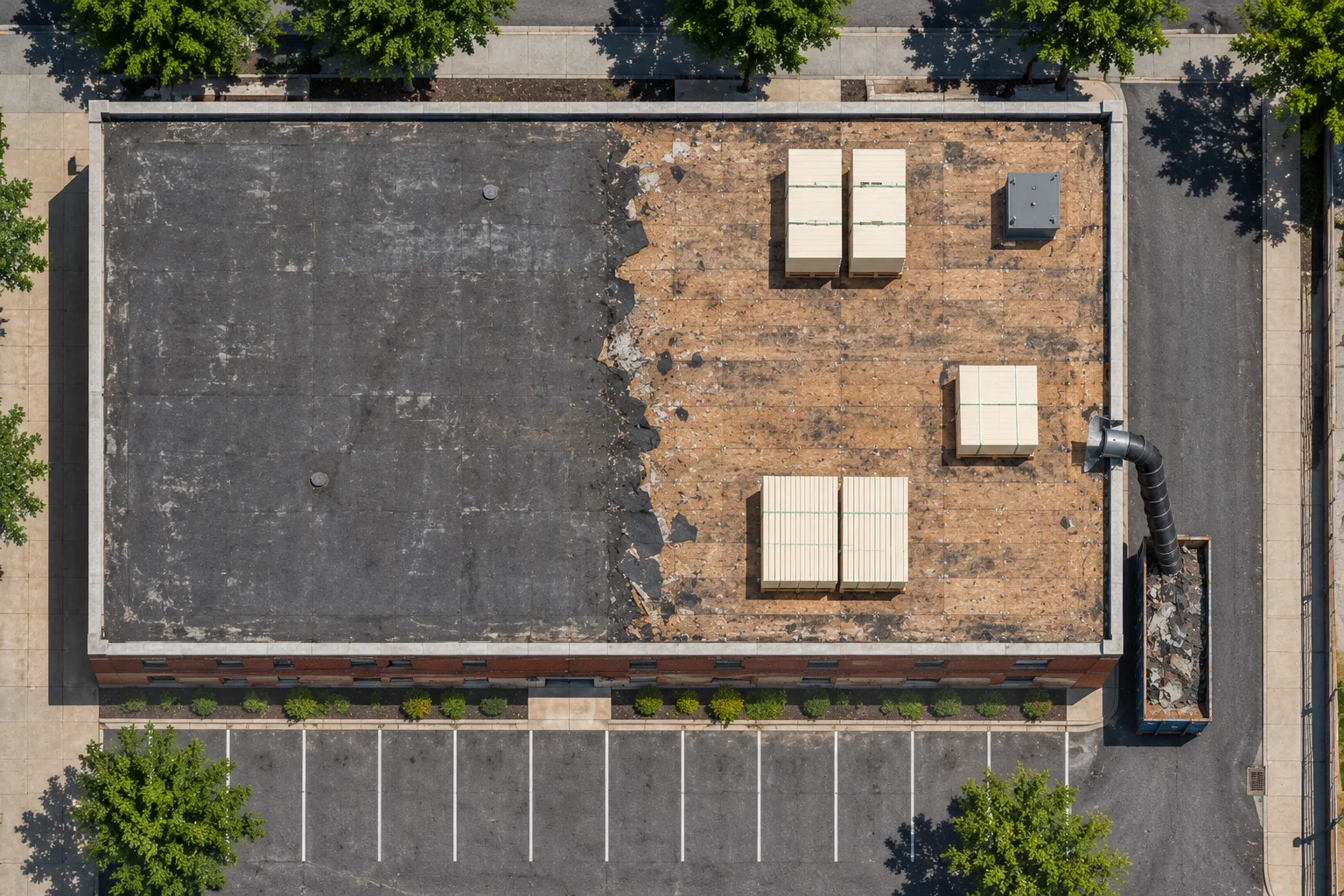
Remove affected materials and prepare the supporting surface before installing the specified insulation and covering. Complete the outlet and perimeter connections as the work progresses. Temporary storage and closures are arranged to keep drainage paths clear during installation.
Inspect Outlets And Transitions
Check the completed drain details and the connections around equipment and walls. Remove debris that could interfere with discharge. The final review describes the installed drainage work and the inspection points that need continued attention during the building’s routine roof maintenance.
ROOFING OPTIONS
Explore Roof Systems For Your Property
Recurring water collection deserves more than a surface description. Explain where it occurs and whether outlets have already been cleared or repaired. Observations help focus the inspection, while the underlying roof shape and outlet connections establish which corrections belong in the proposed work.
How can a Taylor replacement project address recurring roof puddles?
A Taylor replacement project can address recurring puddles when the cause is investigated and included in the roof design. We check outlets, insulation shape, and supporting conditions. The new covering then follows the planned correction instead of simply covering the arrangement that allowed water to collect.
What Shapes Taylor Commercial Roof Drainage Improvements?
Outlet location, roof geometry, and the condition of existing layers shape the work. We inspect restrictions and low areas before selecting corrections. Changes in insulation height also need coordination with curbs and walls, so the drainage design and flashing details are developed together for the roof.
Can Taylor Tapered Roof Insulation Correct Every Puddle?
Tapered insulation is one design tool, but the cause of collecting water must be established first. A blocked outlet, damaged deck, or unrelated drainage defect needs attention to that component. We evaluate the assembly and discharge route before determining which insulation arrangement fits the project.
Does A New Membrane Automatically Change Roof Slope?
A replacement sheet follows the surface beneath it. Changing slope requires work to the supporting assembly or a designed insulation arrangement. We identify the drainage objective before selecting the covering and coordinate the resulting height changes with outlets, curbs, and perimeter flashing.
What Should Be Checked After Roof Debris Is Removed?
Check whether the outlet and adjacent membrane remain intact and whether water still collects after the restriction is cleared. Continuing problems warrant investigation of the roof shape and underlying layers. The maintenance visit should also look for damage caused by debris or prior attempts to clear the drain.
START WITH YOUR PROPERTY
Get An Estimate From A Taylor Commercial Roofing Contractor
Tell us the address and the work you are considering.