Heat-Welded Seams Joined Around Curbs And Roof Edges
As a Wilkes-Barre TPO Roofing Contractor, we install and repair commercial membrane roofs, including the seams, insulation, and flashing that connect the assembly.
TPO ROOFINGEPDM ROOFINGINDUSTRIAL ROOFINGCOMMERCIAL METAL
THE WHOLE ASSEMBLY
Work With A Wilkes-Barre TPO Roofing Contractor
Wilkes-Barre TPO Roofing Contractor services begin with the connections your building needs.
Broad Membrane Areas
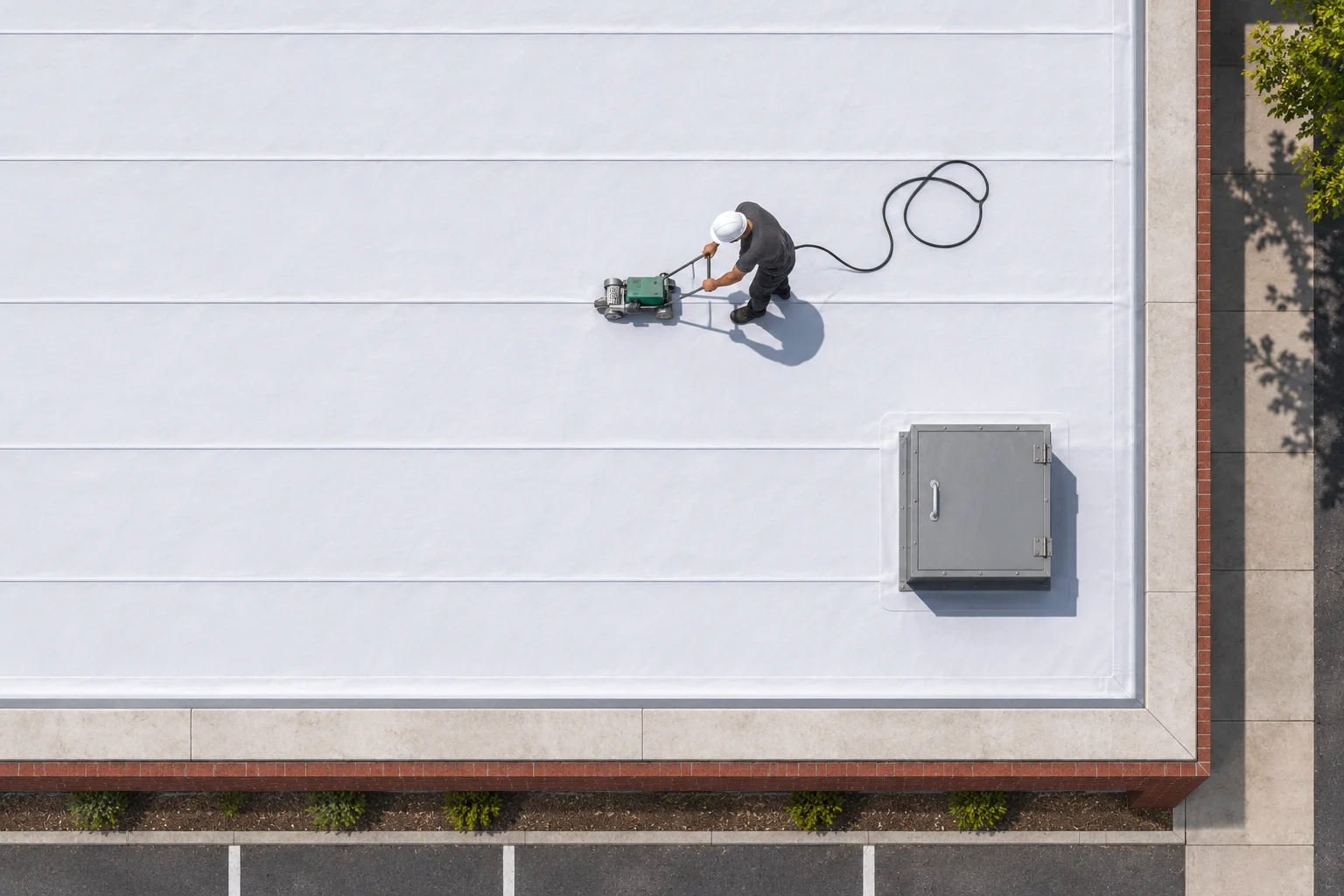
TPO roofing joins thermoplastic sheets with hot-air welding. We install the membrane over an approved substrate and secure it using the selected assembly’s attachment method. Wide roof areas still need careful treatment where the field membrane meets a wall, drain, or equipment curb.
Existing Roof Layers
Wet insulation, deteriorated decking, and unstable coverings must be addressed before new TPO is installed. Roof investigation establishes which materials can remain and which need removal. Recovering a roof requires a compatible, adequately attached base with the existing moisture condition understood.
INSPECT THE DETAILS
TPO Roofing Conditions In Wilkes-Barre
Watch
Weld Access
Crowded equipment can leave little room for a welding tool at the base of a curb. We lay out sheets and detail pieces so the seam can be joined and checked. A difficult corner needs an intentional connection before the main membrane reaches it.
Watch
Drain Connections
Debris around a drain can conceal damage to the membrane beneath the clamping ring. Inspection includes the outlet, adjacent insulation, and surrounding water marks. New material must connect to the drain assembly while preserving the intended path for water to leave the roof.
Watch
Perimeter Attachment
Lifting edges concentrate stress where the membrane terminates against metal or masonry. We examine the attachment beneath the visible flashing, including damaged wood nailers. Rebuilding a loose edge involves the supporting detail as well as the sheet that covers it.
Watch
Traffic Wear
Service routes between a roof hatch and rooftop units can collect punctures from tools and repeated foot traffic. Compatible walkway material belongs on the actual maintenance route. Drain access and seam inspection must remain possible after protective pads are installed.
SYSTEM CHOICES
TPO Roofing Choices For Wilkes-Barre Buildings
Attached Assemblies
Fasteners and plates transfer loads through the roof assembly to the supporting deck. Their selection and layout follow the designed system, deck condition, and attachment requirements. A fastening pattern should be established from the building rather than copied from a neighboring roof.
Adhered Systems
Adhered membrane needs a prepared surface and the specified adhesive application. Temperature, moisture, and drying conditions affect the work sequence. Installation includes checking the substrate and coordinating each area of adhesive with the membrane that will cover it.
Detail Materials
Corners, pipes, and changes in roof height require compatible flashing materials. We use details appropriate to the selected TPO system and the actual penetration. A pipe boot needs a complete connection at both the membrane and the pipe it surrounds.
Continuous membrane work across open roof areas can incorporate planned routes to equipment.
Keeping the finished drains visible helps maintenance staff remove debris and inspect outlets.
Sheet layout also accounts for the edges of retained roof sections and changes in insulation height.
Occupied Offices
Phased work keeps roof removal, material handling, and protected interior areas coordinated.
Roof access is arranged before opening the covering.
Noise and equipment activity are discussed with the building contact so occupants understand which portions of the property are affected.
Retail Buildings
Equipment curbs and parapets often require more detailing than the clear membrane field.
Rebuilding those connections with the roof keeps the water-control layer continuous.
Access below the work, deliveries, and tenant entrances determine where materials and removed roofing can be handled.
Serviceable Details
A visible, accessible seam is easier to inspect than a connection hidden beneath unnecessary overlapping patches.
We finish transitions so later inspections can distinguish the membrane, flashing, and adjacent metal.
Maintenance instructions should identify the approved materials for future repairs.
FROM INSPECTION TO COMPLETION
Installing TPO Roofing In Wilkes-Barre
Inspect The Assembly
Start with the roof surface and the conditions below it. We inspect seams, outlets, insulation, and accessible deck areas, then identify investigation needed at concealed layers. The resulting work boundaries distinguish retained materials from areas that must be removed.
Prepare The Substrate
Remove the specified roofing and replace damaged components before laying new boards. Keep insulation dry and establish the intended slopes at outlets. Surface preparation also includes correcting raised fasteners and sharp edges that could damage the new membrane.
Join The Membrane
Lay out sheets around drains and curbs, secure the assembly, and weld the seams under appropriate conditions. Detail changes in direction with compatible materials. Welding settings and seam checks follow the system instructions for the conditions encountered on the roof.
Check The Connections
Examine seams, terminations, and penetrations before the work area is released. Clear construction debris from drains and check access to equipment. The final discussion covers the installed details and the access paths intended for future maintenance traffic.
Can cold weather affect TPO seams even if the membrane remains usable?
Cold weather affects seam preparation and welding conditions. We check moisture, wind exposure, and the manufacturer’s installation requirements before joining sheets. Adhesives and accessories have their own limits, so the membrane, substrate, and detail materials all need acceptable conditions during installation.
Can A TPO Roof Last 30 Years?
Maintenance helps identify developing TPO defects, but the roof’s service life also depends on installation and exposure. Seams, edges, and puncture-prone equipment routes need inspection. Decisions about continued service follow the present condition of the assembly, including any moisture below the sheet.
What TPO disadvantages matter on a frequently serviced commercial roof?
Repeated service traffic can puncture TPO or damage details around crowded equipment. We consider access paths, tools, and the space available to maintain curbs before selecting the assembly. Compatible walkway protection and accessible connections belong in that decision alongside membrane thickness and attachment.
How Should TPO Vs EPDM Seam Requirements Influence Roof Selection?
TPO seams are heat-welded, while EPDM connections use the selected system’s preparation and joining materials. We compare the available access and detail geometry before choosing a roof assembly. Both systems require compatible insulation, drainage, flashing, and attachment to function together.
What Changes TPO Roofing In Cold Weather?
Surface moisture and the working limits of adhesives can change the installation sequence. A clear sky alone does not establish acceptable roof conditions. We check the surface and follow product instructions before proceeding, with particular attention to shaded curbs and sheltered areas where moisture remains.
What Are The Downsides Of TPO Roofing Around Equipment?
Equipment concentrates service traffic and creates tight flashing corners. Those details need enough room for installation and later inspection. We assess exhaust exposure and maintenance routes, then select compatible protection and detail materials instead of treating an open membrane area and a crowded equipment area identically.
START WITH YOUR PROPERTY
Get An Estimate From A Wilkes-Barre TPO Roofing Contractor
Tell us the address and the work you are considering.