Rubber Membranes Connected Across The Entire Roof Assembly
As a Wilkes-Barre EPDM Roofing Contractor, we install commercial rubber roof systems with prepared seams, secure edges, and flashing fitted to the building.
TPO ROOFINGEPDM ROOFINGINDUSTRIAL ROOFINGCOMMERCIAL METAL
THE WHOLE ASSEMBLY
Work With A Wilkes-Barre EPDM Roofing Contractor
Wilkes-Barre EPDM Roofing Contractor services begin with the connections your building needs.
Flexible Roof Covering
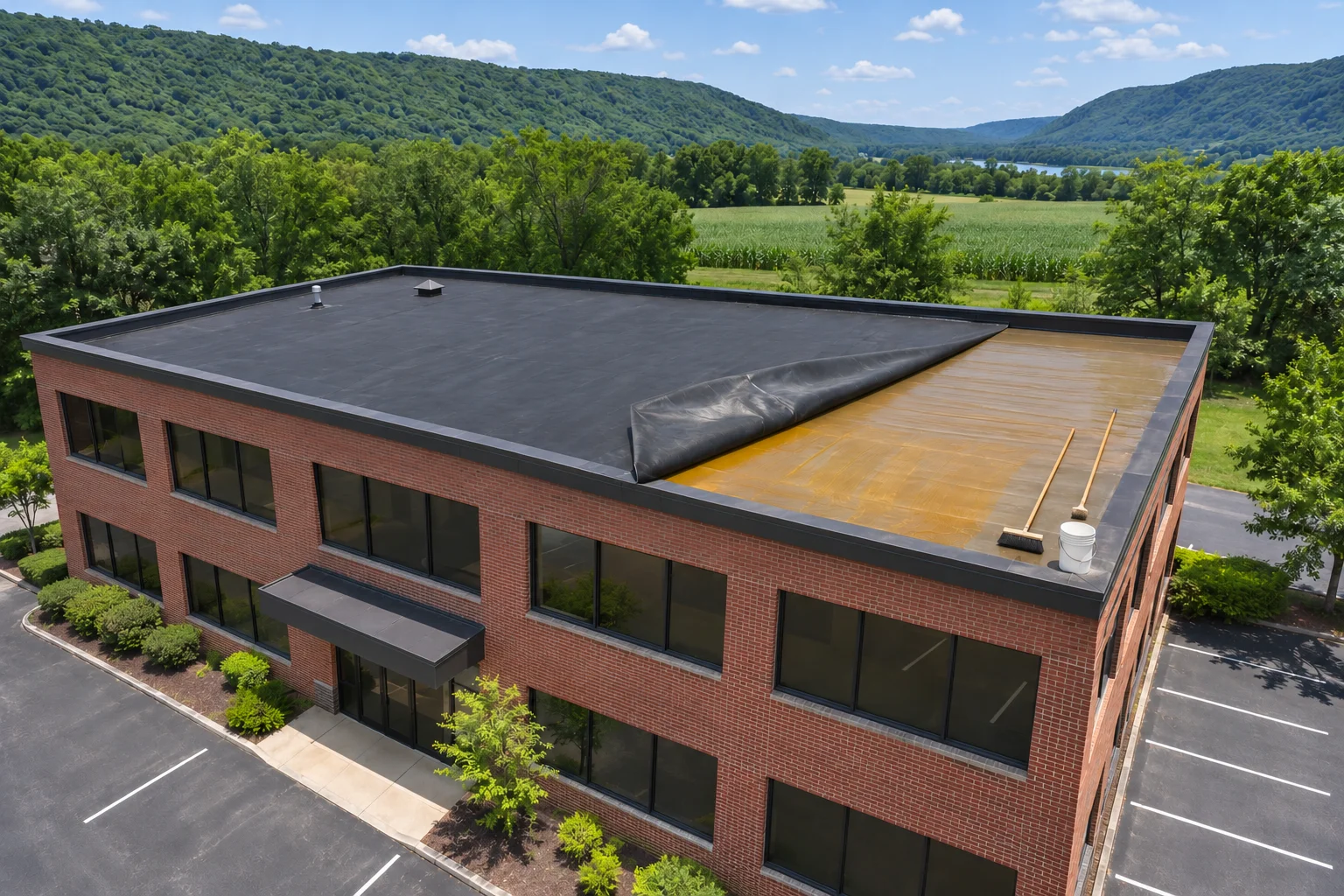
EPDM is a rubber membrane used on commercial low-slope roofs. Large sheets reduce the number of field connections, while the remaining seams and transitions still require careful preparation. We select the complete assembly around the roof deck, insulation, attachment, and expected exposure.
Repairable Or Widespread Damage
A localized puncture in otherwise serviceable membrane calls for a different approach from loose seams across several roof sections. We inspect the surrounding sheet and underlying materials before choosing repair boundaries. Saturated insulation and deteriorated supports must be addressed as part of the work.
INSPECT THE DETAILS
EPDM Roofing Conditions In Wilkes-Barre
Watch
Lap Preparation
Dust, old residue, and incompatible patch products interfere with new EPDM seam materials. Cleaning and preparation follow the selected system’s requirements. We inspect the existing connection and surrounding rubber before setting the repair size, including the distance needed beyond the damaged portion.
Watch
Wall Transitions
Membrane that bridges tightly between a roof and a parapet can develop stress at the angle change. The inspection includes the attachment and flashing termination above that corner. A repair must connect to stable material and accommodate the detail’s geometry without leaving unsupported pockets.
Watch
Loose Edge Metal
Perimeter metal can move separately from the membrane beneath it. We check joints, fasteners, and the supporting nailer before covering the connection. Replacing only the visible rubber leaves an unresolved problem if the metal edge or its base remains loose.
Repair First
Surface Damage
Cuts from dropped tools and dragged equipment can expose the roof layers below EPDM. Protective access routes reduce avoidable contact with the field sheet. Inspection after other roof work helps identify newly damaged spots before interior moisture is used as the first sign of trouble.
SYSTEM CHOICES
EPDM Roofing Choices For Wilkes-Barre Buildings
Adhered Rubber Membrane
An adhered assembly bonds the membrane to a prepared substrate using compatible materials. The surface needs the condition specified for the adhesive, and the installation sequence must account for its application limits. We also coordinate the bond area with sheet placement and flashing work.
Ballasted Roof Systems
Ballast adds weight and changes access to the membrane. Structural capacity and the designed roof system must support that approach. Inspection and future maintenance also need consideration, because finding or repairing a seam beneath stone involves moving and restoring the covering above it.
Mechanically Attached Designs
An attached EPDM assembly transfers loads through specified fasteners and connections. Deck type, condition, and the designed attachment determine the work. The selected system must include compatible details at perimeter zones, penetrations, and any transitions to a different existing roof covering.
Large rubber sheets can span broad areas while seams are organized around roof geometry.
We plan the sheet arrangement before installation so field connections and flashing remain reachable.
The membrane still needs clear drainage and a stable surface beneath it throughout the installed area.
Equipment Buildings
Flexible flashing pieces can form around pipes and irregular transitions when the selected materials permit that detail.
Preparation is critical at each connection.
Equipment support locations and maintenance clearances are checked so service work can occur without repeatedly disturbing the new flashing.
Commercial Additions
A new roof section needs a deliberate connection to the retained building.
We examine height differences, shared outlets, and wall flashing before selecting materials.
The boundary between old and new construction should remain inspectable after the replacement or addition is complete.
Maintenance Access
Clearly defined walkways help separate routine servicing from vulnerable roof details.
Access to seam edges, drains, and terminations is kept available.
Building staff can then follow a practical route while checking the components most likely to need attention during later inspections.
FROM INSPECTION TO COMPLETION
Installing EPDM Roofing In Wilkes-Barre
Examine The Rubber
Inspect the field sheet, seams, and flashing before deciding what to retain. We compare surface damage with interior moisture reports and check accessible underlying layers. Existing repairs are identified so the new work uses compatible materials at its boundaries.
Restore The Base
Remove wet or unstable components and prepare the deck and insulation for the selected assembly. Correct drainage-related details included in the work. The substrate must support the membrane installation, including the connection areas around roof hatches and equipment curbs.
Set Sheets And Flashing
Position the EPDM, complete its attachment, and prepare seams using the specified system materials. Flash penetrations and angle changes as part of the same installation sequence. Protect prepared surfaces from dirt while the connection work is being completed.
Review Edges And Outlets
Check the finished seams and perimeter terminations, then remove loose material from the roof. Drain openings and maintenance access should be clear. We identify any retained components that need separate attention so the completed work has a defined, understandable boundary.
Water collecting near damaged EPDM flashing can expose weaknesses as conditions change. We inspect outlets, seams, and low areas when access is safe. The check follows the drainage path and adjoining connections, rather than assuming the flexible sheet alone resolves a blocked or damaged outlet.
Is Rubber Roofing For Commercial Buildings An Option?
EPDM can be considered for a distribution building when the deck, exposure, and attachment suit the proposed assembly. Large roof areas still need properly executed seams and flashing around equipment. We also check service routes and drainage before selecting the covering and insulation together.
Which EPDM defects can arise from poor access planning?
Unplanned equipment access can concentrate wear and punctures in exposed rubber membrane. We examine the access paths people actually take from the roof entry to service points. Compatible protection belongs along those paths, while drains, seams, and equipment flashing remain available for inspection.
What decides whether an EPDM roof should be adhered or ballasted?
Attachment selection depends on structural capacity, wind design, substrate, and service access. Ballast adds weight and covers parts of the membrane; adhered roofing needs appropriate bonding conditions. We assess those requirements with the complete assembly before recommending either arrangement for the building.
What Are Common Problems With EPDM Roofs At Walls?
Open terminations, stressed corners, and poorly prepared repairs can allow water into an EPDM wall transition. Inspection follows the connection above and below the visible defect. The repair includes the affected rubber and any unstable attachment, rather than covering a loose detail with another patch.
How Do Fully Adhered Vs Ballasted EPDM Systems Affect Inspection?
An adhered membrane leaves much of the sheet exposed for visual inspection. Ballast covers the surface and must be moved where access is needed. That difference affects inspection and repair work, alongside the building’s ability to carry the weight and the assembly’s designed attachment requirements.
START WITH YOUR PROPERTY
Get An Estimate From A Wilkes-Barre EPDM Roofing Contractor
Tell us the address and the work you are considering.